
Mobile App
FinTech
Product Designer
UX Research
User Flows
Design System
UX/UI Design
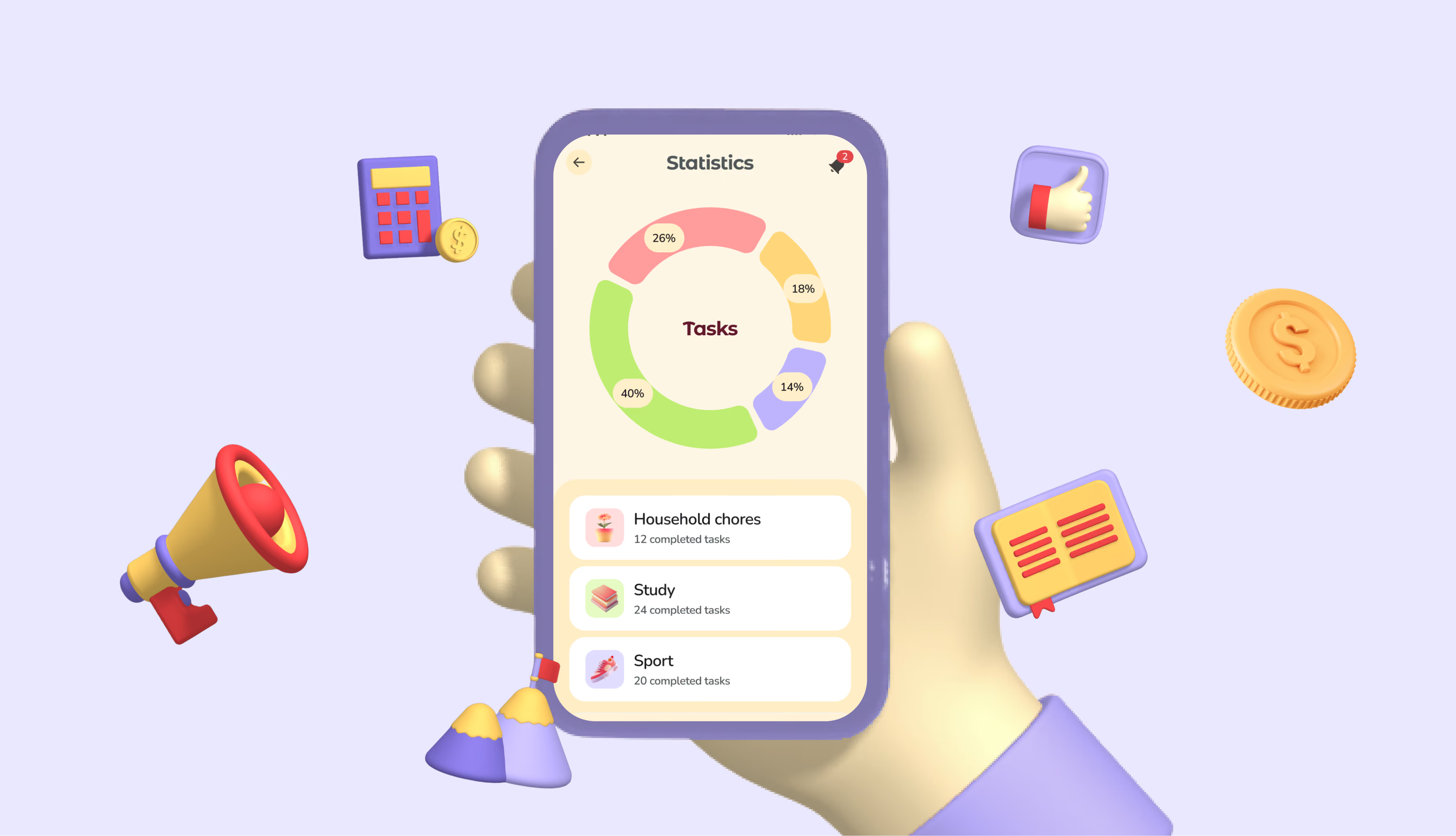
• increases families’ engagement with the bank’s ecosystem;
• encourages the habit of using the card regularly;
• boosts customer loyalty;
• creates added value for parents;
• helps children develop basic financial skills.
If a child receives financial rewards from their parents for completing tasks, the connection between the action and the result will become clearer and more motivating
• increased engagement among children;
• regular use of the service within the family;
• an increase in the number of completed assignments;
If a child can see the progress they’re making towards saving for a desired purchase, the process of saving money will become more meaningful and engaging
• an increase in the number of savings goals set;
• the formation of a habit of long-term planning;
• a rise in the proportion of users who regularly set money aside;
If financial literacy lessons are accompanied by badges, levels and rewards, children will return to the app more often and complete the scenarios they have started
• an increase in DAU/WAU;
• increased user retention;
• greater engagement with educational scenarios;
If a child learns about financial literacy by carrying out real-life tasks, saving and managing money, they will absorb the knowledge more quickly than through traditional teaching methods.
• a better understanding of basic financial principles;
• an increase in the long-term value of the service for users;
• an increase in the number of completed learning scenarios;
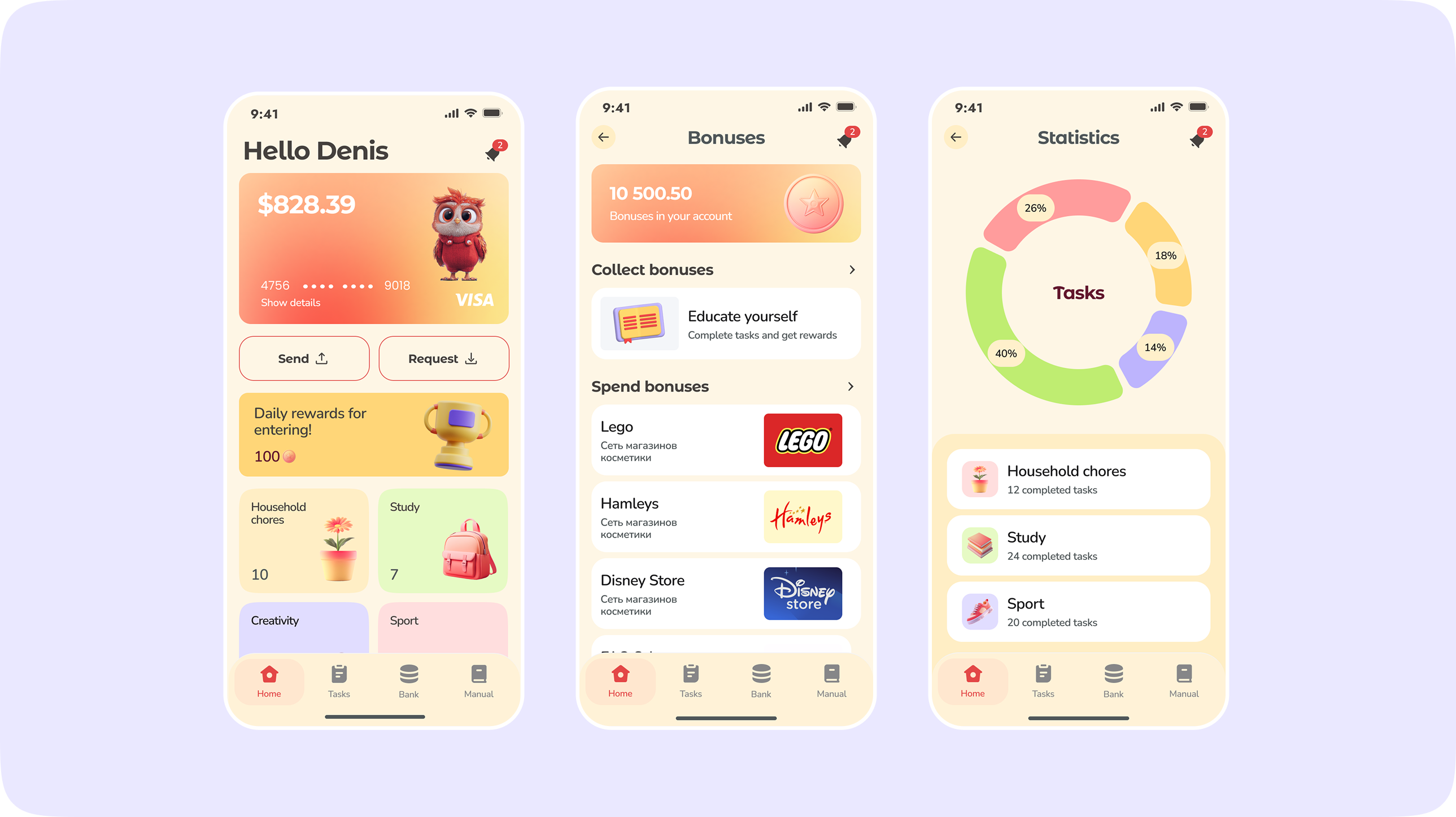
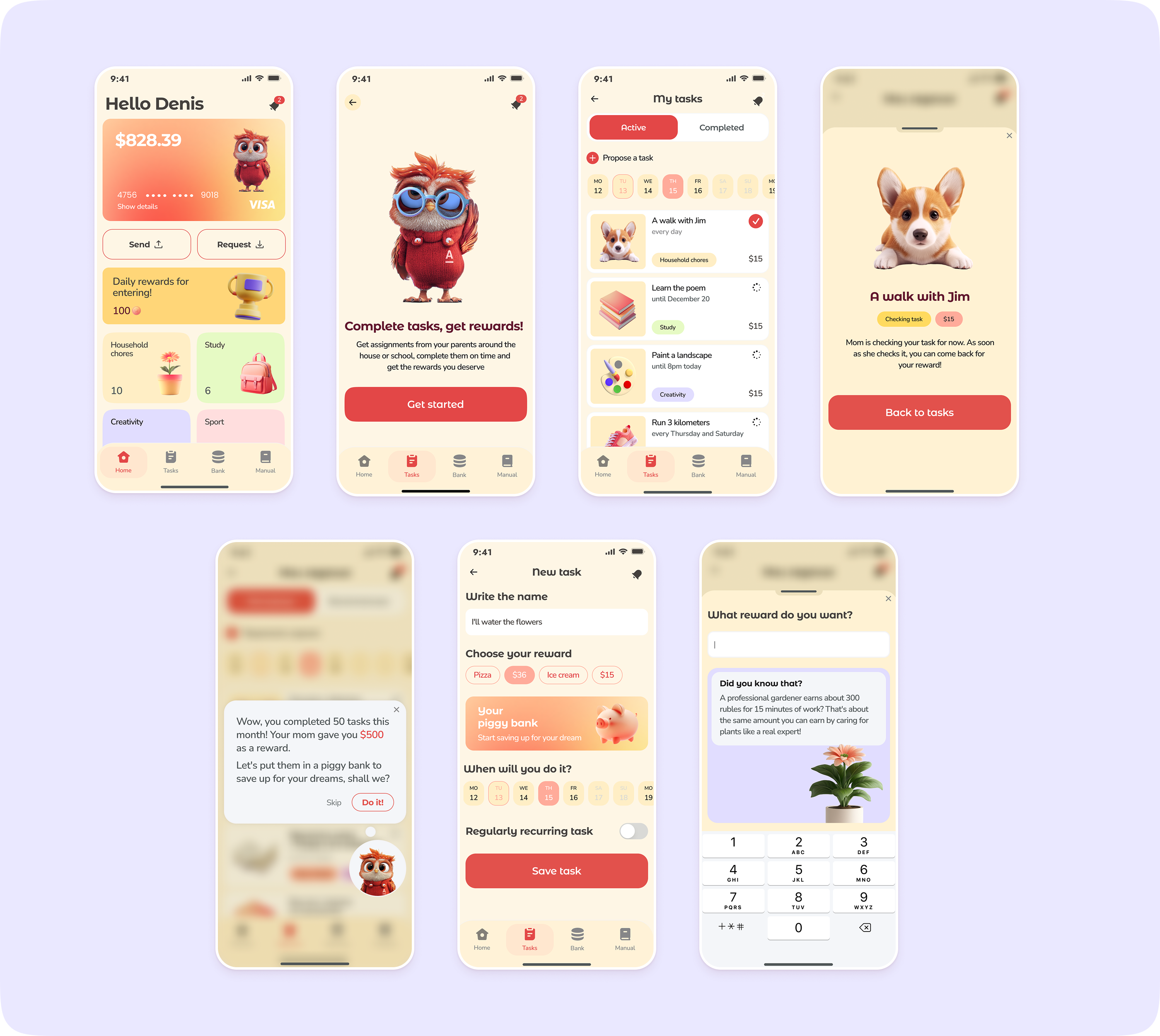
I designed a single hub for managing a child’s finances, tasks and educational activities. The dashboard helps parents quickly check their child’s card balance, monitor their progress and manage key scenarios without having to switch between different sections of the app.
• quick transfers and fund requests;
• managing bonuses and rewards;
• analytics on completed tasks;
• tracking educational progress.
parents gain full control over their child’s finances and activity within a single interface, which simplifies management and saves time
increased parental loyalty, higher app usage frequency and the strengthening of the family experience within the banking ecosystem
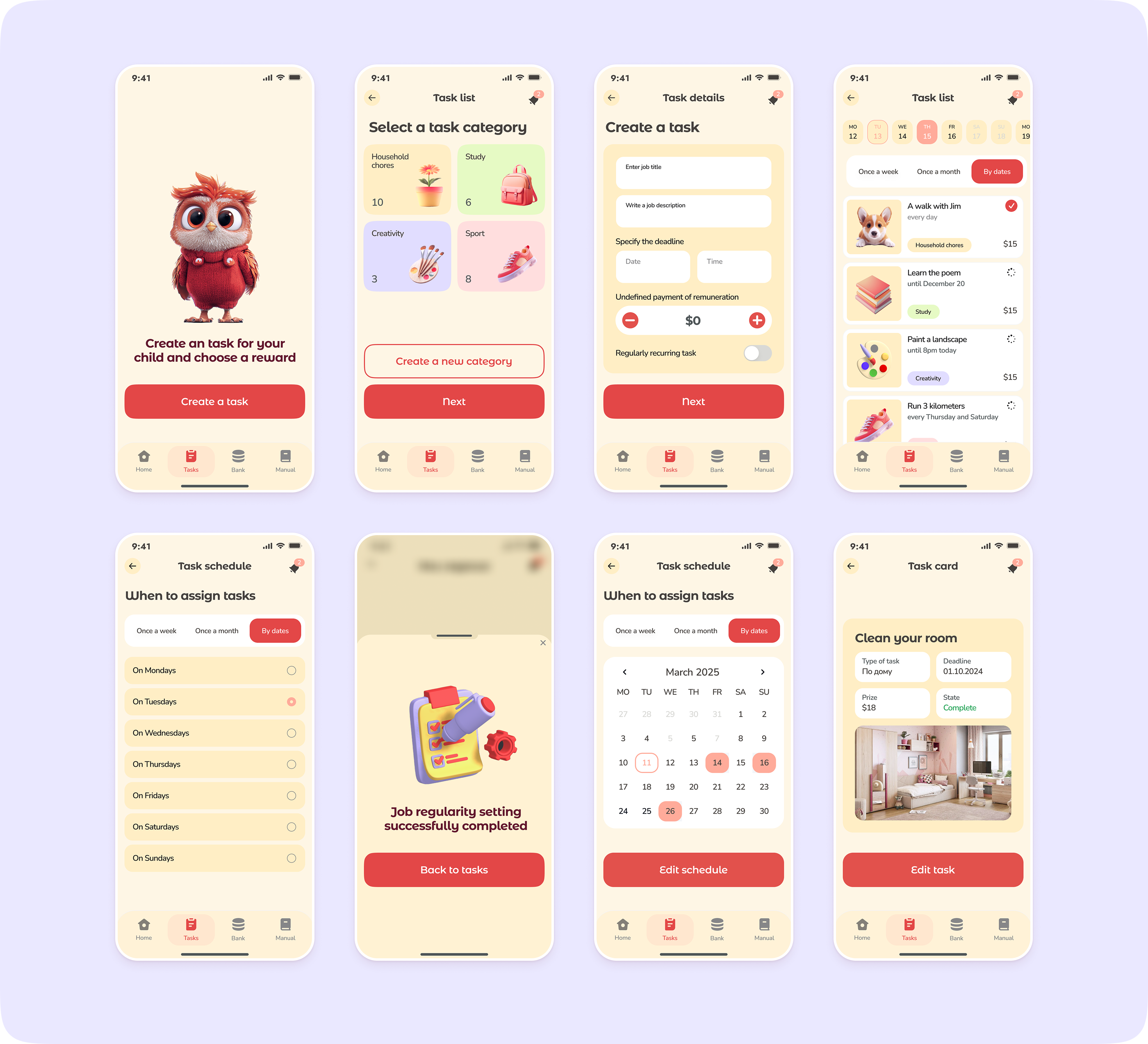
I designed a system for creating and managing tasks that helps parents foster good habits in their children through a system of tasks, deadlines and financial rewards.
• monitoring statuses and progress;
• managing completion schedules;
• assigning monetary rewards;
• setting up recurring tasks.
parents gain a convenient tool for motivating their child and fostering healthy habits through a straightforward reward system
increased family engagement, greater regularity of service use, and enhanced value of the children’s card for parents
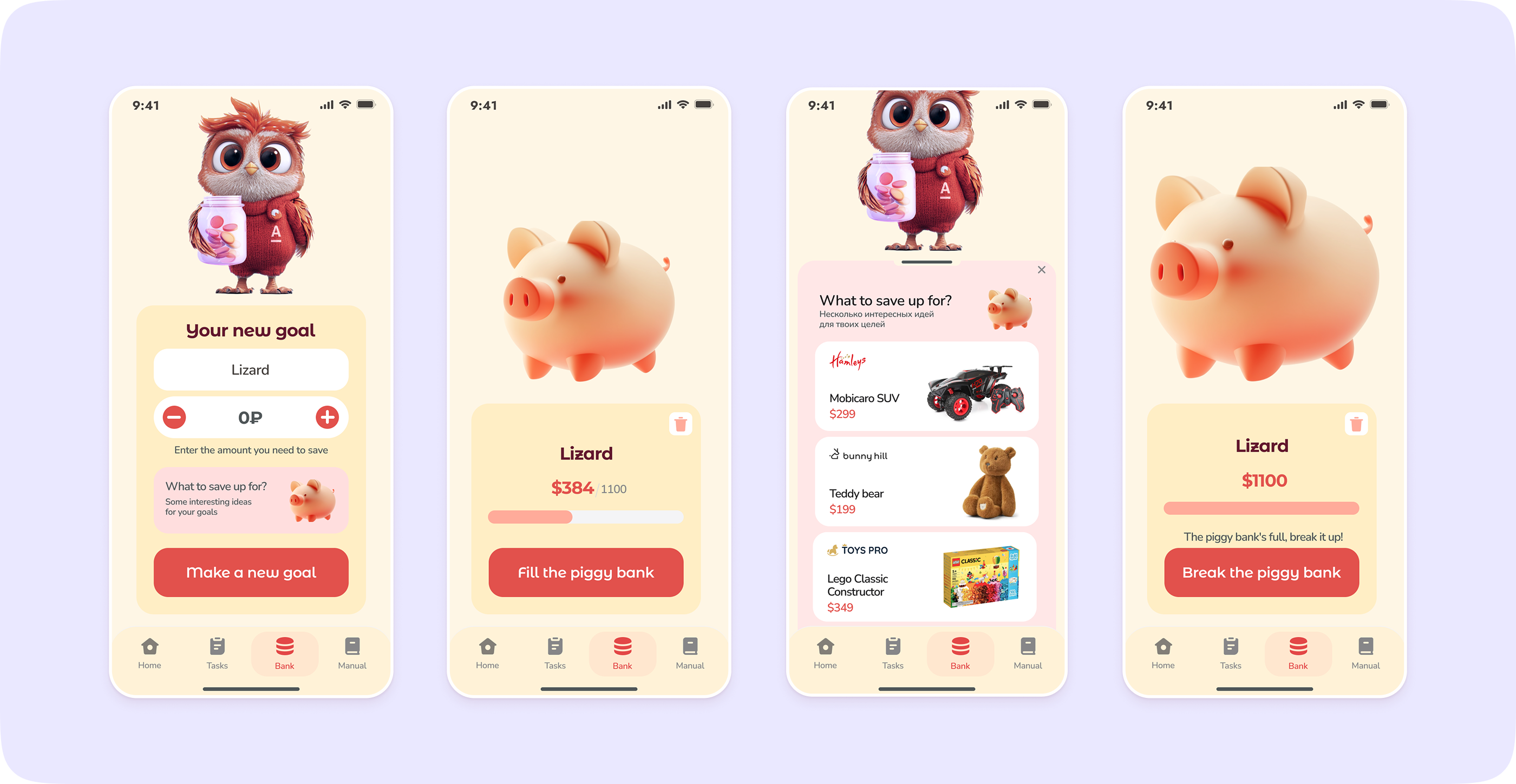
I designed a gamified savings system that helps children move away from impulsive spending towards conscious financial planning. Instead of the usual card balance, the child sees a specific goal, their progress towards it, and recommendations on how to save
• setting goals with a desired savings amount;
• selection of popular items and ideas for saving;
• visualising progress via a digital piggy bank;
• automatic top-ups from earned rewards.
developing the habit of saving money, fostering financial discipline and understanding the value of long-term goals
increasing children’s engagement with the bank’s financial products, boosting user retention and increasing the number of regular interactions with the service
Designed a task completion system that helps children earn pocket money, develop independence and learn the basics of financial responsibility through real-life activities.
• receiving tasks from parents;
• submitting results for review;
• viewing terms and rewards;
• receiving monetary rewards;
• tracking completion status.
children learn to link their actions to outcomes, develop a sense of responsibility and gain their first experience of managing their personal finances
increased engagement among children, improved user retention and greater activity within the bank’s ecosystem
increased engagement among children, improved user retention and greater activity within the bank’s ecosystem
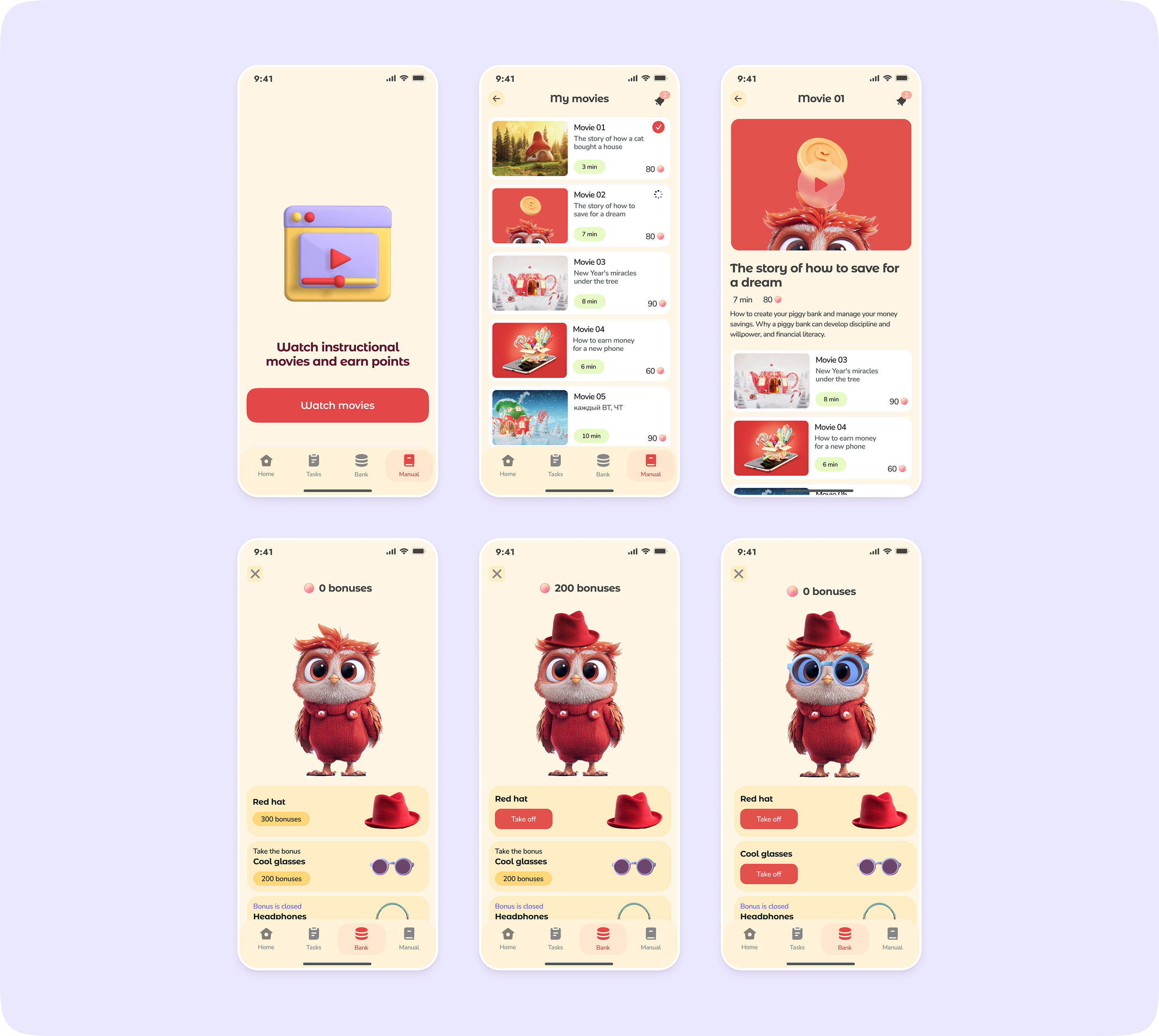
An educational section that helps children learn the basics of financial literacy through short video tutorials and gamification mechanics. Upon completing the educational content, users receive bonuses that they can exchange for accessories and items to personalise their virtual character.
• a system of achievements and additional rewards;
• a library of video lessons on financial literacy;
• bonuses for completing educational content;
• a shop selling virtual items and accessories;
• character customisation.
children learn to link their actions to outcomes, develop a sense of responsibility and gain their first experience of managing their personal finances
learning about financial literacy becomes more accessible and engaging thanks to game mechanics, whilst the rewards system helps maintain motivation and interest in learning
increased user engagement, longer time spent interacting with the product, and improved retention through game mechanics and educational content
• Automatic tasks: recurring tasks scheduled at set times;
• Mini-lessons on saving, spending and budgeting;
• Family Challenges, shared goals for parents and children;
• AI mentor: personalised recommendations for your child’s financial development;
• Automatic tasks: recurring tasks scheduled at set times;
• Mini-lessons on saving, spending and budgeting;
• Family Challenges, shared goals for parents and children;
• AI mentor: personalised recommendations for your child’s financial development;